
By Shelly M.
Published November 8, 2026
It is said that in the professional world, a person is treated by how they present themselves. T-shirts, flip-flops, too short, or too shabby can create negative buzz even around the most brilliant of minds. However, when it comes to what we consider “good” professional appearance vs what we consider ‘’bad,” who exactly makes the rules?
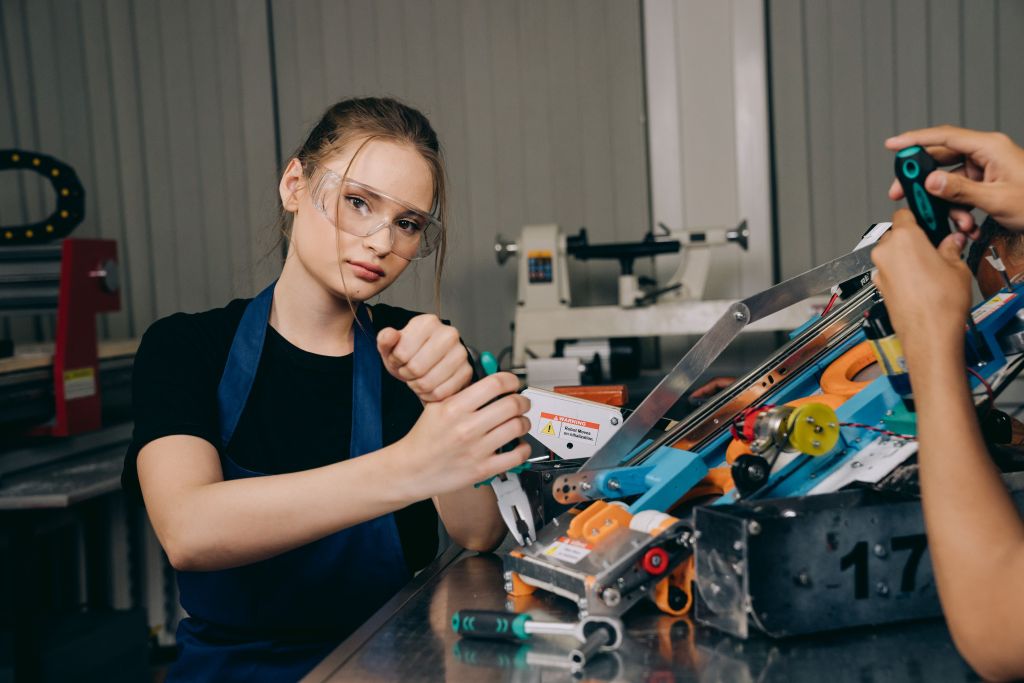
In this article, we explore this idea of the “good” and the “bad” in the professional world, particularly as it involves hairstyles. We also explore how work environment, culture, and greater societal norms play a role.
Unpacking “Good” and “Bad” Hair Norms
This may sound off-beat and non-serious. However, perception plays a large role in many ways beyond whether or not your peers and colleagues choose to be your buddy. Perception directly affects things like promotions, project-placements, and even the assumption of competence.
What makes this topic even more perplexing is that many of silent expectations that have become norms are rooted in personal beliefs about the world that originate outside of the workplace. It usually manifests as pressure to conform to a norm that strips individuals of all individuality and favors the appearance of a certain disdain for care about personal statements in looks.
This “phenomenon” is likely industry-dependent. In, say, the fashion industry, the question of individual expression may be a no brainer. Professionals are encouraged to find a stylistic voice and bring it with them to the office or studio. However, what about the more “steam-pressed” industries, such medicine, law, or engineering? Do they welcome such individuality? How much is welcomed, and from whom is it welcomed?

Note that spaces where there is a corporate dress code or where the dress code expectation has been put into writing are excluded from this conversation. We also exclude the more creative spaces where individual expression is welcomed. Hopefully, to you all, the topic of this article sounds completely foreign.

The Circle of Trust in Personal Expression
It turns out that trust goes a long way. The amount of trust a person has in a particular setting, or better yet, the amount of trust that the environment has in the person is a key factor. For many marginalized groups (note that who is marginalized can differ from environment to environment), trust may not really be there. “Well that’s weird,” one may say. “I am a 20-year, well-trusted professional in my industry.” That is awesome and most likely true. However, some marginalized groups may argue that, though good at what they do, they feel they are on borrowed time in many of the less fashion-forward industries. You’re there, but still arriving, accepted in, but not yet fully “of.”

Therefore, you’re walking on ice, and that being in every way possible. From the clothes you wear, “dress to impress,” to the time you show up “I’m 10 minutes early to the meeting so that I don’t reflect badly on everyone else from group A.” You end up hiding behind a persona.
Trapped by the Work “Persona”
I’d like to venture a thought. While some level of controlling one’s personal presentation at work to exclude the “quirks” is expected (and maybe even welcomed in some environments), controlling away the positive things that make you an individual is an error. In professional spaces, I see people suppress so much of themselves until the creative in me asks (silently, in my own mind, of course) “do you really enjoy being a carbon copy of everyone around you? How long do you intend to play it safe? Are you happy with the idea of living through an entire career this way?”

The sad thing with personas is that the world around you begins to expect it from you after a while. For instance, the professional world expects that you chemically straighten your hair if it’s naturally curly, because many other people in that environment straighten their curly hair. Or there may be the expectation that women wear pants to work because all of the men do. The one day that you choose to break free from the imposed persona, you become a rebel, or worse yet… an attention-seeker.
Some years ago, I nearly fell into this trap myself. I chose a hairstyle that was uniquely me, yet chicly professional. Do you know what happened? I received no complements. Everyone went about their day with the occasional long stare. Initially, I felt invisible. I even wondered if I had made a mistake. Yet, I saw a remarkable thing happen within a week or two of my refusal to be a carbon copy. I began to see others – particularly other women, show up to work with more expressive – yet still professional – hairstyles and outfits. This was proof enough for me that the underlying assumption about the negative effect of extreme self-suppression was not wrong. Others wished to shed the unnecessary tyranny of “the persona” as well.

For my friends existing in industries where personal fashion is, on its best day, an afterthought, the compounding effect of a suppressed sense of style paired with a world that has learned to expect it is a weight that can be hard to bear. This is why when it comes to “good” vs. “bad” in the world of professional style, you can either let the unspoken and unwritten “rules” completely shape you… Or you can do what the most innovative people do and work with the margins you’ve been given – by reshaping them into a voice that is truly your own.



If smart self-expression is something that you know you are born for then you’ve stumbled upon the right site. Our styling weapon of choice is hair, and in particular, bold and edgy hairstyles for the working professional. If you are looking for where to gain inspiration, check out our real and artificial hairstyle galleries. And please, if any part of this article resonates with you, let us know in the comments below.
About the Author
Shelly M. is the founder of Hairnastics.com. She is an artist, entrepreneur, engineer, and hair stylist. She started Hairnastics.com after years of wondering if she’d ever enjoy her natural hair in the midst of perms, imposed beauty standards, and professional settings that left her wondering how she could continue to bring a little more of herself with her. She’s enjoyed interweaving her own personality into every one of her hairstyles and being inspired by others who do the same.
#professionals #hairstyles #corporateamerica #unspokenrules #engineering #science #mathematics #technology #law #business #fashion
Leave a Reply